How SAP Invoice Control works
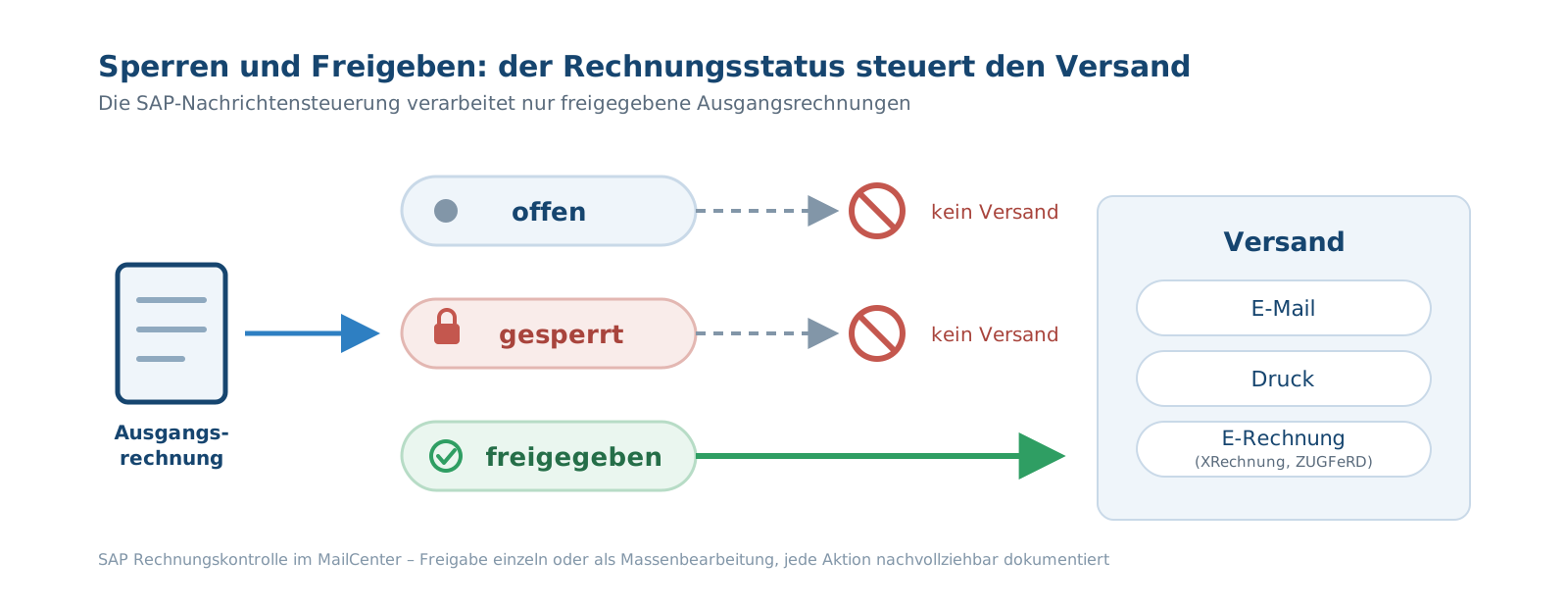
The process consists of four steps. First, in Customizing, you define which billing documents are subject to control. If a matching invoice is subsequently created, it is considered open and automatically remains blocked. In the third step, the specialist department calls up the worklist and looks through the documents as PDFs. Finally, it releases verified invoices – the message control takes over the sending. Who released and when remains comprehensibly documented.
The documents come directly from the SAP archive: The cockpit accesses the archived invoice PDFs via ArchiveLink. The system checks authorizations for each sales organization.
Invoice control at a glance:
| Application area |
Outgoing invoices (SD invoices) before dispatch |
| Advertising |
PDF in the SAP document viewer or Acrobat Reader, also collective display |
| Status |
open, blocked, released |
| Control |
Sales organization, billing type, value limit, BAdI for your own logic |
| Systems |
SAP S/4HANA, from SAP ECC 6.0 |
| Platform |
Part of the MailCenter |
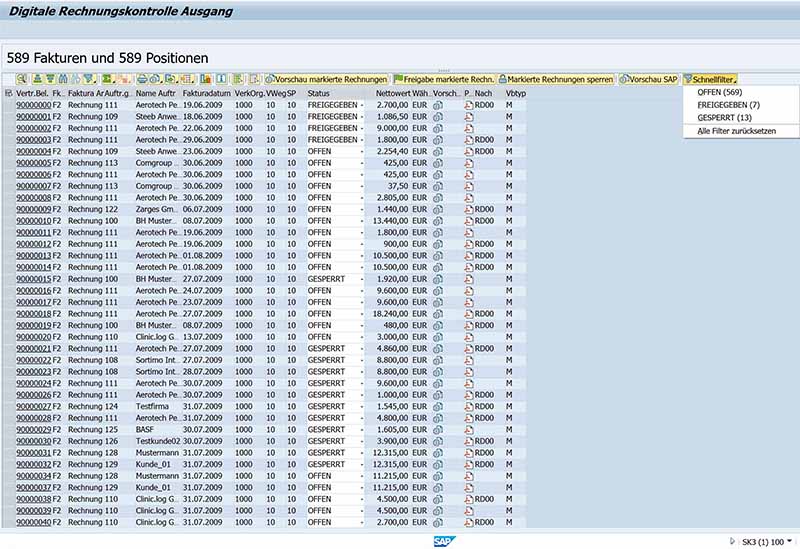
Practical example Augustiner-Bräu: Collection control on the screen
Munich’s oldest brewery sends goods invoices as daily invoices, every 10 to 14 days or monthly. In the past, each receipt was printed, individually checked, enveloped and stamped. Today, the control is digital.
The result: Invoices can be checked and approved regardless of location, and the delivery time of each receipt is documented. “The investment costs for the software are recouped after a short time due to the elimination of postage fees,” sums up Dominik Essig, Deputy Head of IT. You can read the complete case study in the Augustiner-Bräu success story.